Emergency Piping · Lake Havasu City, AZ
Lake Havasu City Pipe Break Repair: Shut Off, Locate, Repair
A pipe break is not one problem. It is three different problems that all look the same from the outside, and the one you have decides what the repair costs.
Lake Havasu City pipe break repair begins at the main shutoff, which is why that comes before anything else on this page.
The point of the first visit is to work out which of the three you are looking at. Everything else follows from that.
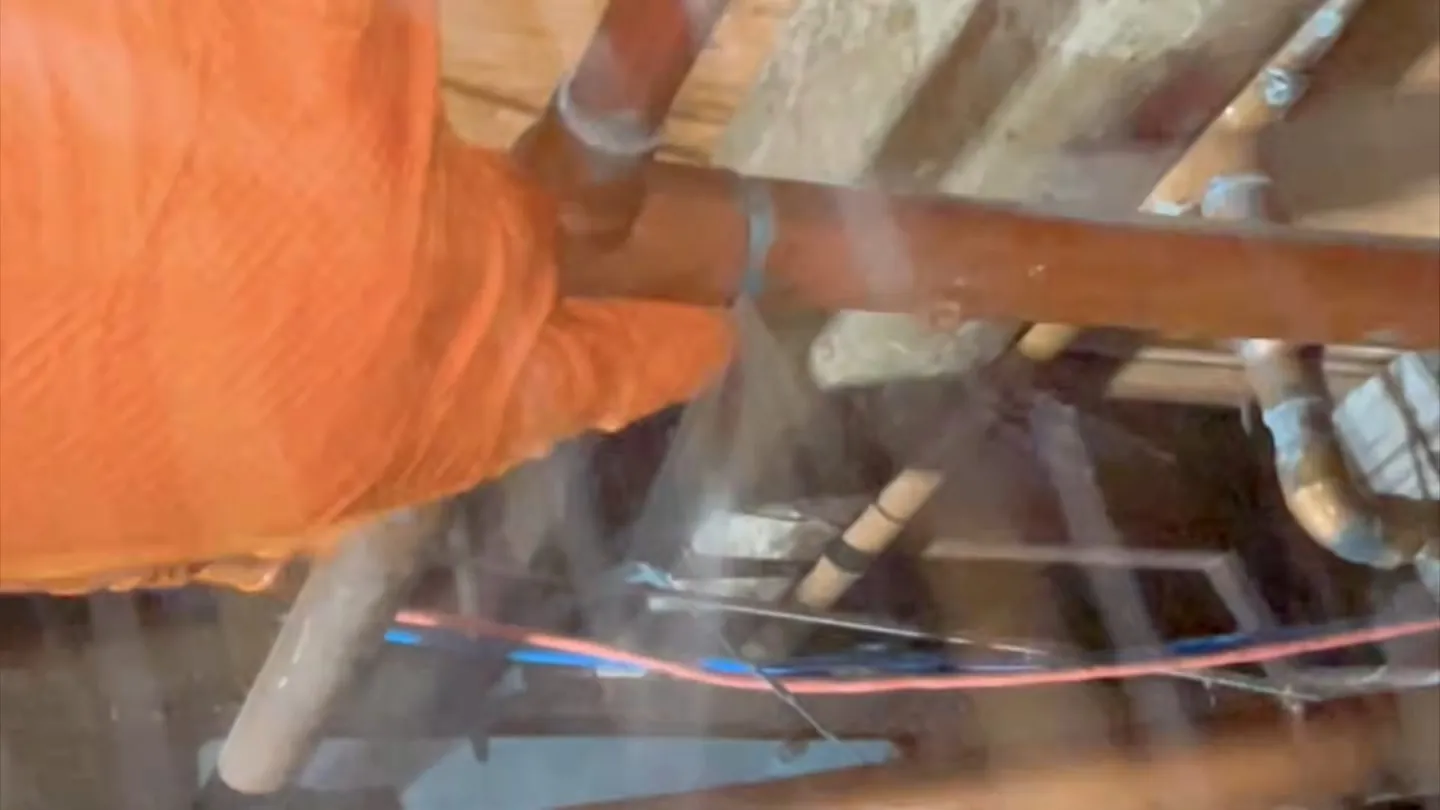
Three ways a pipe breaks, and how to tell them apart
These fail differently, show up in different places and need different work. A quote given before anyone knows which one it is has been guessed.
| Failure | What you see | Where it usually is |
|---|---|---|
| Sudden split | Water arriving fast, often with a drop in pressure everywhere else | Exposed runs, garage walls, under the slab |
| Pinhole corrosion | A damp patch or a stain that grows over weeks, no pressure change | Hot lines first, then horizontal runs |
| Joint or fitting failure | Water at one point only, sometimes intermittent | Behind fixtures, at the water heater, at hose bibs |
The second and third kinds are the ones people live with for a while. By the time the drywall is marked, the repair is usually bigger than the pipe.
Freeze damage in a city that averages 35 days above 110 degrees
Havasu is not a freezing climate, which is exactly why freeze breaks happen here. Nobody prepares for them.
The city's own weather record for 2015 logged a low of 31 degrees on December 28, which tied a record, and 18 days below 40 degrees across the year. One night at 31 degrees is enough for an uninsulated pipe on an exterior wall.
What makes it worse is that the break is rarely noticed on the cold night. Ice blocks the pipe. The water arrives when it thaws, often the following afternoon, and often while nobody is home.
Frozen pipe thaw: what to do, and what not to do
If a pipe is frozen but not yet split, open the nearest tap so water can move as the ice melts. Warm the pipe gradually, with a hair dryer or warm towels. Never use an open flame.
If the pipe has already split, thawing will start a leak. Shut the water off at the main first, then call. A pipe that thawed and held still needs checking, since the damage can be in a fitting you cannot see.
What freezes first in a house built for the heat
In rough order of how often they are the cause.
- Hose bibs and anything still connected to them, including hoses left attached over winter
- Pool and irrigation lines above ground on the north and east sides
- Pipe runs through an uninsulated garage, especially along the outside wall
- Lines in a vacant house where the heat has been switched off to save money
- Exposed runs under a raised deck or in a crawl space with open vents
A house that sits empty for part of the year carries more of this risk than one that is lived in, because nothing gets caught early. That matters in a city where a large share of homes are seasonal.
Where pipe repair stops and water damage work begins
These are two separate trades and it is worth being clear about which one you are getting.
Pipe repair means finding the break, stopping the water, replacing the failed section and testing the line. That is what a plumber does.
Drying the structure, pulling saturated insulation, treating for mould and replacing drywall and flooring is restoration work. It is a different licence, different equipment and usually a separate insurance conversation.
The plumbing side should give you something the restoration side and your insurer can both use: what failed, where, and when the water was stopped. Ask for that in writing while the wall is still open.
Water arriving faster than you can mop it?
Call (928) 766-1925Burst pipes in rentals, seasonal homes and commercial buildings
The repair is the same. Who needs to know, and how fast, is not.
In a rental, the tenant usually finds the water and the owner pays for the pipe. Getting both on the same call early saves a second visit and an argument about scope.
In a seasonal home, the break is often found by a neighbour or a property manager, which means the decision maker is not in the building and may not be in the state. We will work from a description and photographs and tell you plainly what can be settled remotely and what cannot.
In a commercial building, the question that matters first is usually not the pipe. It is which parts of the premises can stay open while the work happens, and that is worth raising on the first call rather than discovering on site.
What the call data actually says about broken pipes
Across a national sample of plumbing calls, cracked and broken pipe repair booked at 67.9 percent from 28 recorded calls, with 68 percent of those marked urgent. It was one of the highest booking rates in the sample.
That is not a demand figure for this city, and it is not quoted as one. What it tells you is narrower and more useful: when somebody calls about a pipe that is already broken, they have usually decided. The useful thing a plumber can do on that call is identify the failure correctly, not sell the job.
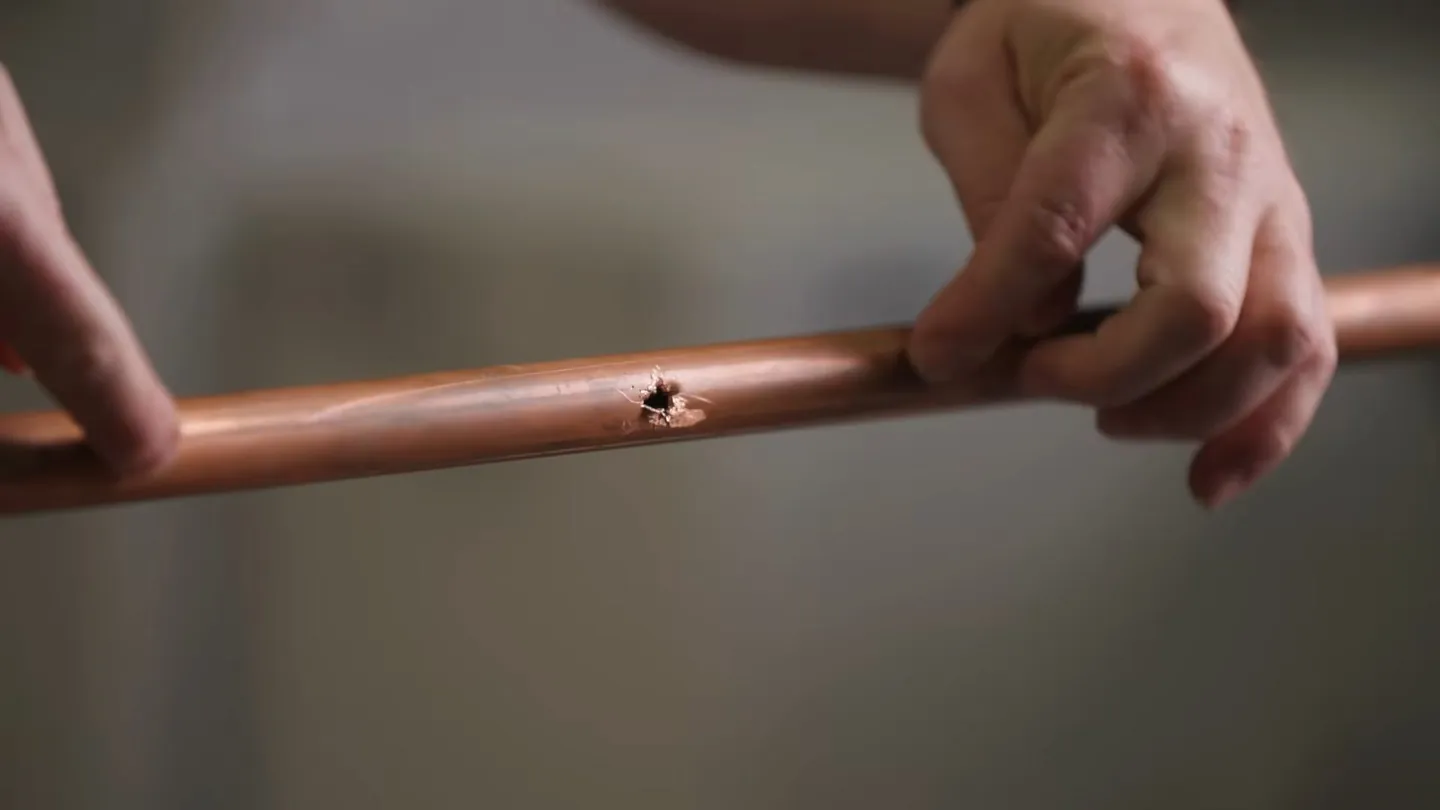
Replacing a section against replacing the run
One break in an otherwise sound line is a section repair. Cut out the failed length, join in new pipe, pressure test, close up.
Several pinholes in the same run inside a year or two is a different signal. The pipe is telling you about its condition, not about one bad spot, and patching it one hole at a time gets expensive quietly.
The honest version of this conversation includes the water. At 19 grains per gallon and 753 parts per million of dissolved solids, measured and published by the city, Havasu water is hard on the inside of a pipe and harder on a water heater. That is context for why a run might be failing, and it is a reason to look at the whole line before agreeing to the third patch.
What will not happen is a repipe quote on the strength of one break. If you are told a whole-house repipe is needed, ask what was observed that makes a section repair insufficient.
A burst on the line between the meter and the house is a different job from a burst inside a wall. Water line repair covers that case.
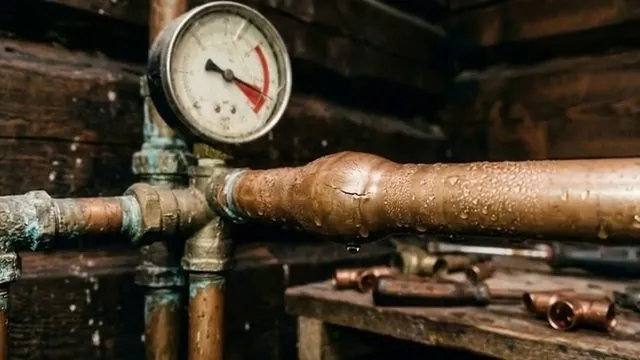
Burst pipe questions we are asked most
Can a pipe really freeze in Lake Havasu City?
Yes, and it does. The city's own weather record for 2015 shows a low of 31 degrees in late December and 18 days below 40 degrees. Pipes here are rarely insulated for it, so a single cold night can be enough. The break is usually noticed when it thaws, not when it freezes.
I have stopped the water. Is this still an emergency?
If the main is off and nothing is still running, the clock has slowed considerably. It is now about how much water got into the structure and how long it stays there. Call it in and say that the water is off, because that changes the triage and may mean you are better served by a scheduled slot than a midnight visit.
Will my insurance cover a burst pipe?
That depends on your policy and on the cause, and it is a question for your insurer rather than for a plumber. What helps your claim is documentation: photographs before anything is closed up, a written note of what failed and where, and the time the water was stopped. Ask for those regardless of who does the repair.
Do you dry out the house as well?
No. Pipe repair and water damage restoration are separate trades with different equipment and different insurance. We will stop the water, repair the line and give you a clear written account of what failed that a restoration company and your insurer can both work from.
Why will nobody quote a burst pipe over the phone?
Because the pipe is rarely the expensive part. What drives a pipe repair is access: whether the break is in an open wall or under a slab, how much has to be opened to reach it, and whether the failure turns out to be one spot or a run. Those are the things a visit establishes, and a number given before them is a guess.
A plumber told me I need a full repipe after one leak. Is that right?
It might be, but one break on its own is not evidence for it. What would be evidence is several failures in the same run over a short period, or a line that is visibly degraded where it has been opened. Ask what was actually observed. A section repair is the default unless there is a reason it is not.
How do I keep pipes from freezing?
Insulate exposed pipes, particularly those on outside walls and in unconditioned spaces. Disconnect and drain hoses. On a hard-freeze night, open the cabinet doors under sinks and let a tap run with a slow drip. Know where the main shutoff is before you need it.
Who do I call for frozen pipes or a broken pipe?
Call a plumber. If a pipe has split, shut off the main first. If the pipe is frozen but intact, open the nearest tap and warm the pipe gently, then call if water does not return.
Need a plumber for a burst pipe?
Describe what you can see, where the water is coming from and what you have already shut off. You will get a view on whether this is a section repair or a longer run, and what each one usually involves, before anyone opens a wall.