
Water Treatment · Lake Havasu City, AZ
Water Softener Installation & Repair Lake Havasu City AZ: Built for 19 gpg Water
Lake Havasu City water measures 19 grains per gallon. That number is published by the city, it is not an estimate, and it is the reason this page exists.
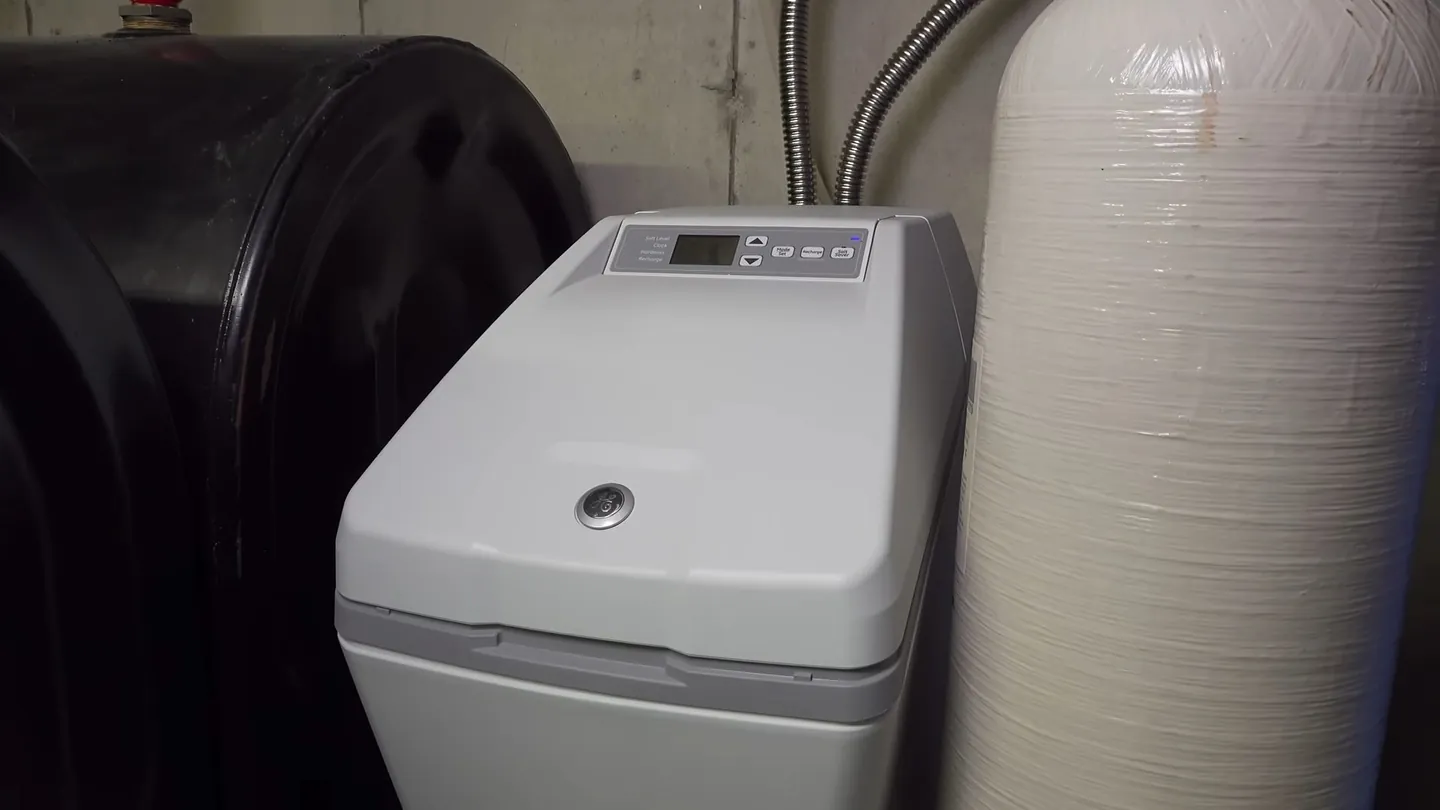
Water softener installation and repair in Lake Havasu City, AZ is sized around the 19 gpg hardness the city reports.
What follows is what 19 grains does inside a house, and how to buy equipment for it without being sold a size nobody calculated.
Published water hardness: 19 grains per gallon
The city's 2025 Annual Drinking Water Quality Report prints total hardness as 19 grains per gallon, with a range of 18 to 20. Total dissolved solids measure 753 parts per million. Those two numbers are measured, published annually and checkable, which is more than any competing plumbing site in this city offers.
Anything above 10.5 grains per gallon is classed as very hard. At 19, Havasu is close to double that threshold.
One caution, because it trips people up. Searching for Lake Havasu water hardness will often surface a figure of 6 to 8 grains per gallon. That belongs to a separate, much smaller system serving an unincorporated area north of the city. If you are on city water, 19 is your number, and the difference between the two is roughly threefold.
How a water softener works against 19 gpg water
A softener swaps hardness minerals for sodium or potassium using a bed of resin. When the resin fills, the unit regenerates with brine and rinses it out.
At 19 grains per gallon the bed loads quickly, which is why capacity and regeneration settings matter more here than the brand on the tank.
What hardness actually does inside the house
Hard water carries dissolved calcium and magnesium. Heat it or evaporate it and those minerals come out of solution and stay behind as scale.
That is why the damage concentrates on the hot side. A water heater is the single worst affected component in the house, because it is a tank that heats the same hard water continuously. Scale settles on the bottom, insulates the element or the burner from the water it is meant to heat, and the unit works harder for the same result.
Everywhere else the mechanism is narrower passages. Aerators, cartridges, shower heads, fill valves and the small ports inside a mixing valve are all designed to tight tolerances, and scale does not need much to change how they behave.
A softener does not remove scale that has already formed. It exchanges the calcium and magnesium out of the incoming water so that new scale stops being deposited. That distinction matters when a salesperson implies that existing damage will reverse.
Where scale shows up first
Roughly in the order you tend to notice it.
| Component | What you notice | What it usually means |
|---|---|---|
| Water heater | Rumbling or popping, slower recovery, shorter life | Sediment on the tank floor, anode consumed early |
| Shower heads and aerators | Spray going sideways, reduced flow | Blocked outlets, usually cleanable |
| Mixing and fill valves | Temperature drifting, a toilet that runs on | Scale in small internal ports |
| Dishwasher and washing machine | Cloudy glassware, stiff fabric, more detergent needed | Minerals competing with detergent |
| Tankless heater | Flow dropping, error codes, more frequent flushing | Scale in the heat exchanger |
Grain capacity sizing matters more than the brand
A softener is specified by grain capacity, which is how much hardness it can remove between regenerations. Getting that number right is most of the job.
The calculation is unglamorous and it is the thing to insist on. Hardness, which is 19 grains per gallon on city water, multiplied by how many people live in the house and how much water they use, gives a daily grain load. The unit is then sized so it regenerates on a sensible cycle rather than constantly.
Undersize it and it regenerates too often, uses more salt and more water, and wears out early. Oversize it and water sits in the resin bed between cycles, which brings its own problems. Neither is fixed by a better brand.
At 19 grains, a house here needs more capacity than the same house in a moderately hard area. A unit sized off a national default will be undersized here. Ask what hardness figure was used in the sizing, and if the answer is not 19, ask why.
Water softener installation in Lake Havasu City: what goes in
A softener installs on the main supply, usually after the shutoff and before the water heater, so every hot and cold line downstream is treated. It also needs a drain for the regeneration cycle and, on most models, a nearby outlet.
Outdoor taps can be left on the untreated side so irrigation does not use up softener capacity. Where the unit goes is decided by the plumbing layout, not preference.
Want the sizing numbers before a model name?
Call (928) 766-1925Questions worth asking before you buy any softener
- What grain capacity are you recommending, and what hardness figure did you size it on
- How often will it regenerate at my household's usage, and how much salt is that per month
- Is it metered or on a timer, and why is that the right choice here
- Where will the drain line and the brine tank go, and is there a drain within reach
- What happens to the bypass if the unit fails, and can I still get water
- What is covered if the resin bed fails, and for how long
- Does this need a permit, and who is pulling it
Any installer should be able to answer all seven without checking with an office. If the sizing questions get a vague response, the sizing has not been done.
Water softener repair in Lake Havasu City: fixing before replacing
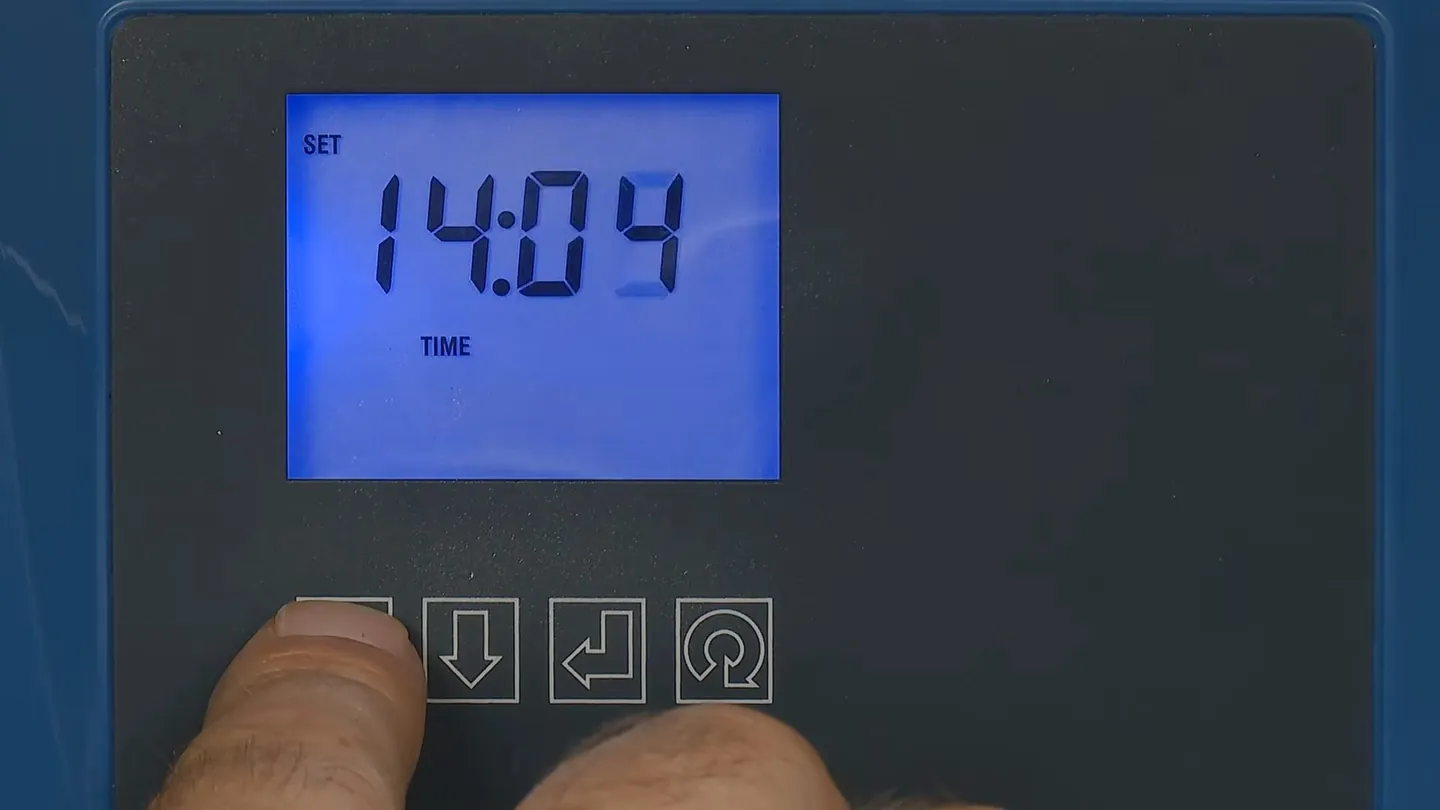
A softener that has stopped softening is not automatically finished. Several of the common faults are repairs rather than replacements.
A salt bridge is the most frequent one. Salt cakes into a solid arch over the brine tank, so the water underneath never reaches it and the unit cycles without regenerating. It looks full and behaves empty. Breaking the bridge up costs nothing.
After that the usual suspects are a failed control valve, a blocked or kinked drain line, a venturi or injector clogged with sediment, and a timer or metering head that has lost its settings. All are component level.
The repair that is not worth doing is a spent resin bed in an old unit, where the cost of new resin approaches the cost of a new softener properly sized for 19 grains. Ask which of these you have before accepting a replacement quote, and ask what was tested to establish it.
Water softener service: salt, resin and what upkeep involves
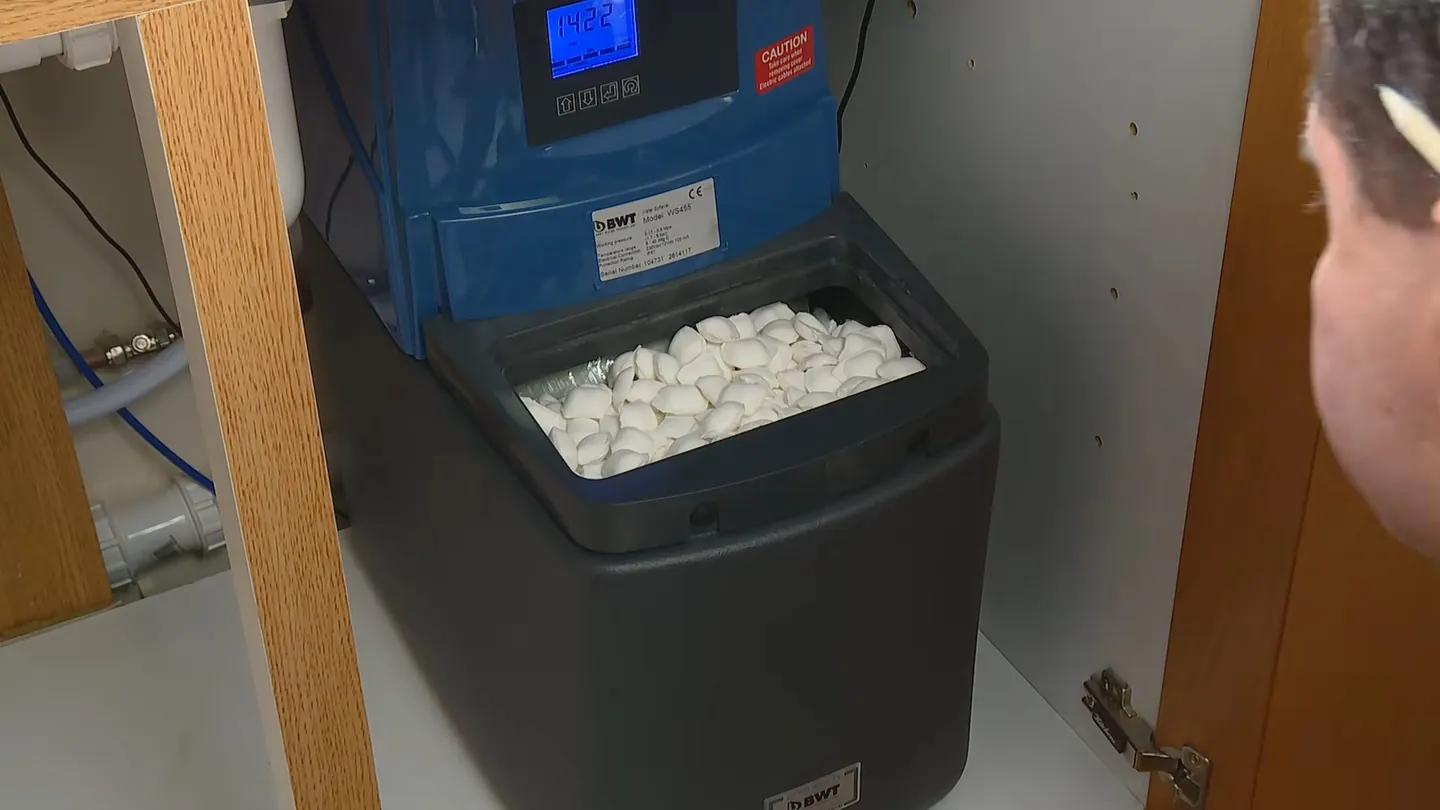
Most softener service comes down to three things: salt, resin and the control valve. Salt bridging or an empty brine tank is a common reason hard water returns.
Resin beads wear over time, and the valve that runs the regeneration cycle can fail. A service visit checks hardness at the tap, the brine tank, the injector and the drain line.
What a softener does not do
This is where a lot of money gets spent on the wrong equipment, so it is worth being blunt.
A softener addresses hardness. It exchanges calcium and magnesium for sodium, which stops scale forming. That is its job and it does it well.
It does not reduce total dissolved solids, which measure 753 parts per million here. It does not change chlorine taste, and it is not a drinking water purifier. Softened water will feel different in the shower and leave your glassware clearer, and it will taste much the same as it did.
If your complaint is taste, odour or what is dissolved in the water rather than what it deposits, the equipment you want is filtration, and there is a separate page on it. Most houses here that are unhappy with their water need both, in that order, and the order is not arbitrary: a softener fitted ahead of a reverse osmosis unit meaningfully extends the life of the membrane.
Softener questions worth asking first
How hard is the water in Lake Havasu City?
The city's 2025 Annual Drinking Water Quality Report gives total hardness as 19 grains per gallon, in a range of 18 to 20, with total dissolved solids at 753 parts per million. Anything over 10.5 grains is classed as very hard, so Havasu is close to double that. Be careful with search results showing 6 to 8 grains, which belong to a separate smaller system north of the city.
What size water softener do I need here?
That depends on your household's water use, but the hardness figure it should be calculated from is 19 grains per gallon on city water. Hardness multiplied by daily usage gives the grain load the unit has to handle between regenerations. Ask any installer what hardness figure they sized on. A national default will undersize a system for this city.
Will a softener remove the scale already in my water heater?
No. A softener stops new scale from forming by treating the water going in. It has no effect on deposits already sitting in the tank or on the heat exchanger. If existing scale is the problem, that is a flush or a service question, and on an older heater it may be a replacement question.
My softener stopped working. Does it need replacing?
Often not. The most common cause is a salt bridge, where salt has caked into an arch over the brine tank so the water never reaches it. Other frequent faults are a failed control valve, a blocked drain line and a clogged injector, all of which are component repairs. A spent resin bed in an old unit is the case where replacement usually makes more sense.
Is a more expensive softener actually better?
Sometimes, but not for the reason it is usually sold on. What matters is grain capacity sized to 19 grains per gallon, and the quality of the control valve, which is the part that fails. Brand matters less than either. Ask for the running cost too, because salt and regeneration water are an ongoing bill that an undersized unit makes worse.
Do I need a softener and a filter, or just one?
They do different jobs. A softener handles hardness and stops scale. Filtration deals with taste, odour and dissolved solids, which measure 753 parts per million here. Many houses in Havasu want both, and the softener should come first in the line, because it extends the life of a reverse osmosis membrane considerably.
Start with a test, not a quote
The city publishes 19 grains per gallon for the system, but your own line, your fixtures and your water heater tell you what it has already cost you. Call and ask for a test before anybody recommends a model or a size.