
Water Heating · Lake Havasu City, AZ
Lake Havasu City AZ Water Heater Repair: Repair or Replace
A water heater gives you a fairly clear signal before it fails, and most of those signals mean something specific.
Water heater repair in Lake Havasu City, AZ comes with an honest repair-or-replace answer rather than a default sale.
This page is about reading them, so you can tell a part from a flush from a unit that has reached the end.
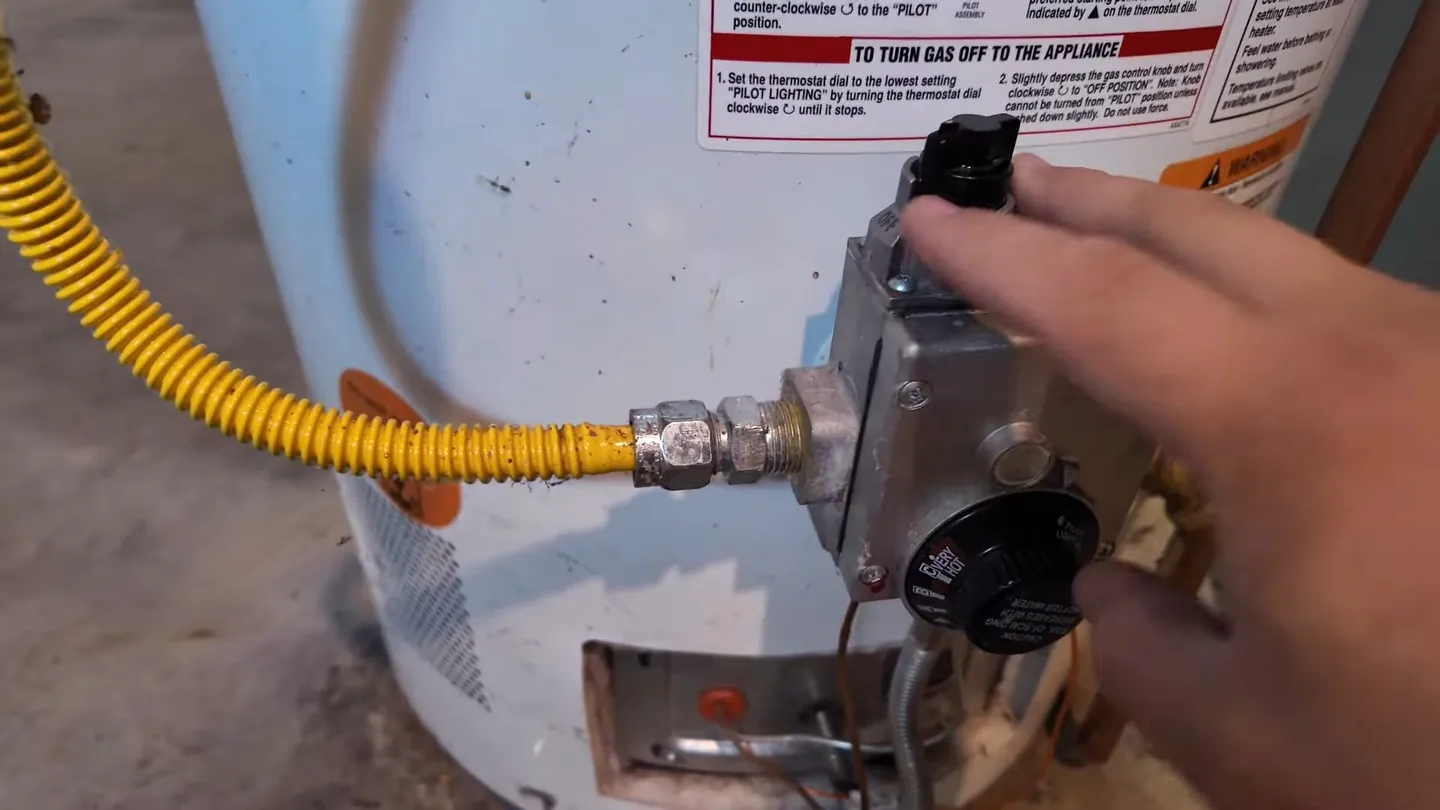
What the symptom usually means
Start here. The symptom narrows it down more than the age of the unit does.
| Symptom | Usual cause | Repair or replace |
|---|---|---|
| No hot water at all | Element, thermostat, burner or igniter | Usually a repair |
| Hot water runs out fast | Sediment taking up tank volume, or a failed dip tube | Often a flush, sometimes a part |
| Rumbling or popping while heating | Scale on the tank floor | Flush, and a check on how far it has gone |
| Water around the base | Fitting, valve, or the tank itself | Depends entirely on which, see below |
| Rusty hot water | Anode spent, corrosion inside the tank | Usually replacement |
Gas water heater repair against electric: what differs
The two fuel types fail in different places. Knowing which you have narrows the likely repair before anyone arrives.
| Part of the system | Gas water heater | Electric water heater |
|---|---|---|
| Heat source | Burner, pilot or igniter, gas valve | Upper and lower heating elements |
| Control | Thermocouple or flame sensor, gas control valve | Thermostats and a high limit switch |
| Common no-hot-water cause | Pilot out, failed igniter or flame sensor | Tripped breaker, failed element or thermostat |
| Also worth checking | Venting and combustion air | The dedicated circuit and its wiring |
| Safety note | A gas smell means leave and call from outside | Leave electrical panels to a professional |
Either way, a hot water heater repair that points at the tank itself usually ends in replacement. Parts can be repaired. A corroded tank cannot.
Water on the floor is the one that has to be identified
Everything else on that table can wait a day. This one cannot, because the answer decides whether you have a repair or a flood.
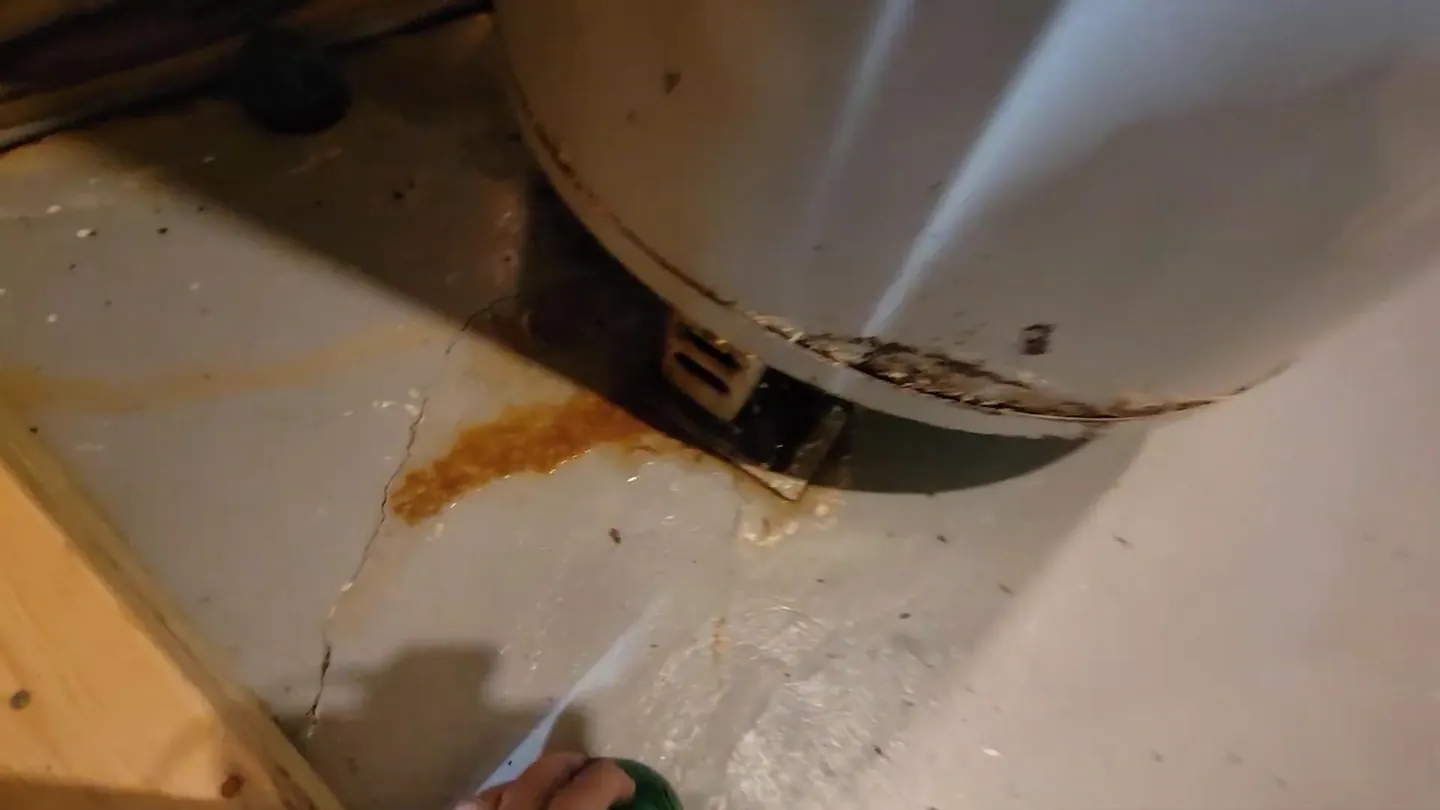
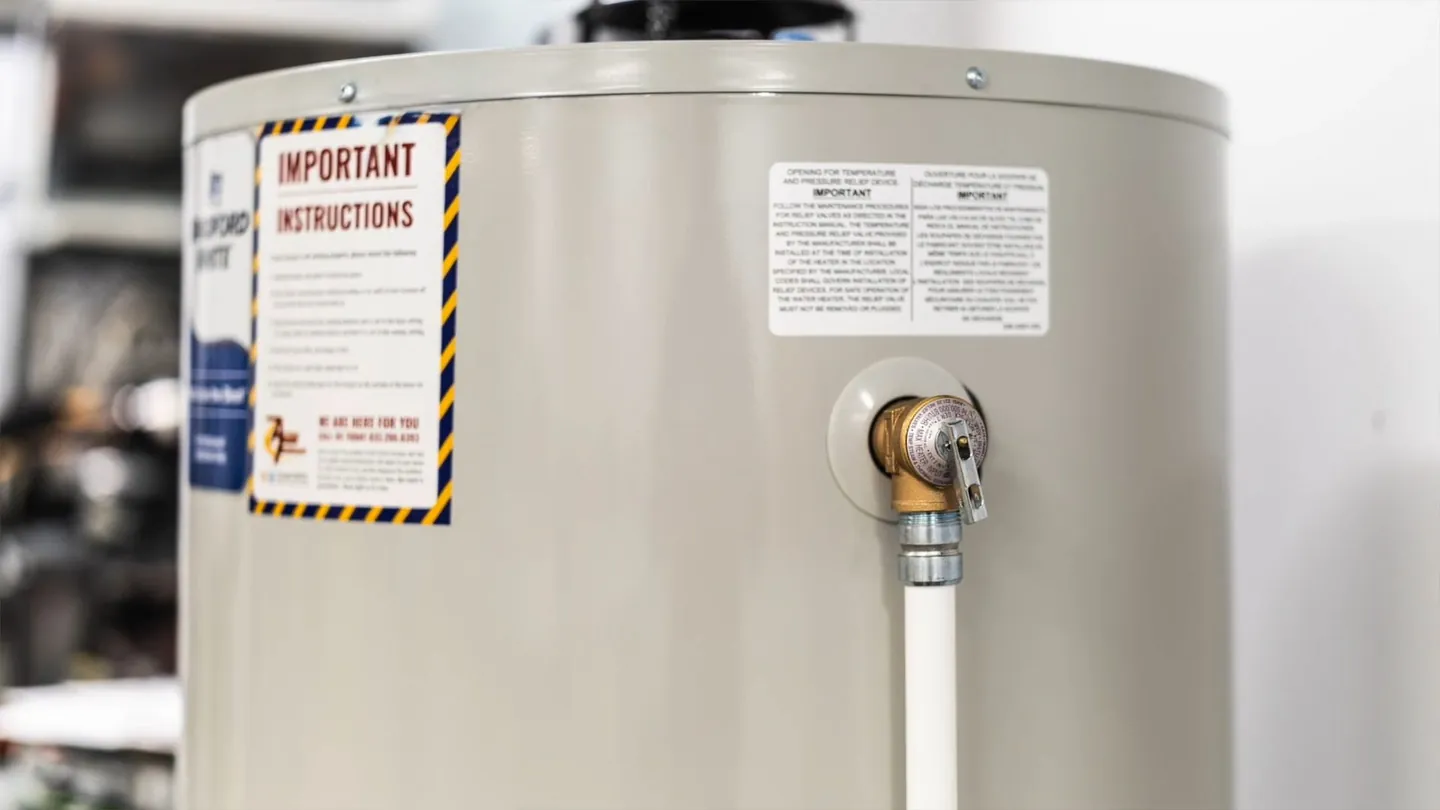
Water at a fitting, a union or the temperature and pressure valve is a part. Those are serviceable and the tank is fine.
Water seeping from the body of the tank is the tank, and there is no repair for it. A steel tank that has corroded through gets worse, not better, and the failure mode at the end is sudden.
If the heater sits in the garage near the slab edge, which is common here, a puddle has more than one possible source. Telling a heater leak from a slab leak is set out on slab leak detection and repair. Worth reading before anyone cuts concrete.
Why heaters here age faster than the warranty assumes
Manufacturer life expectancy assumes average water. Havasu water is not average. Hardness here measures 19 grains to the gallon on the city's own annual report.
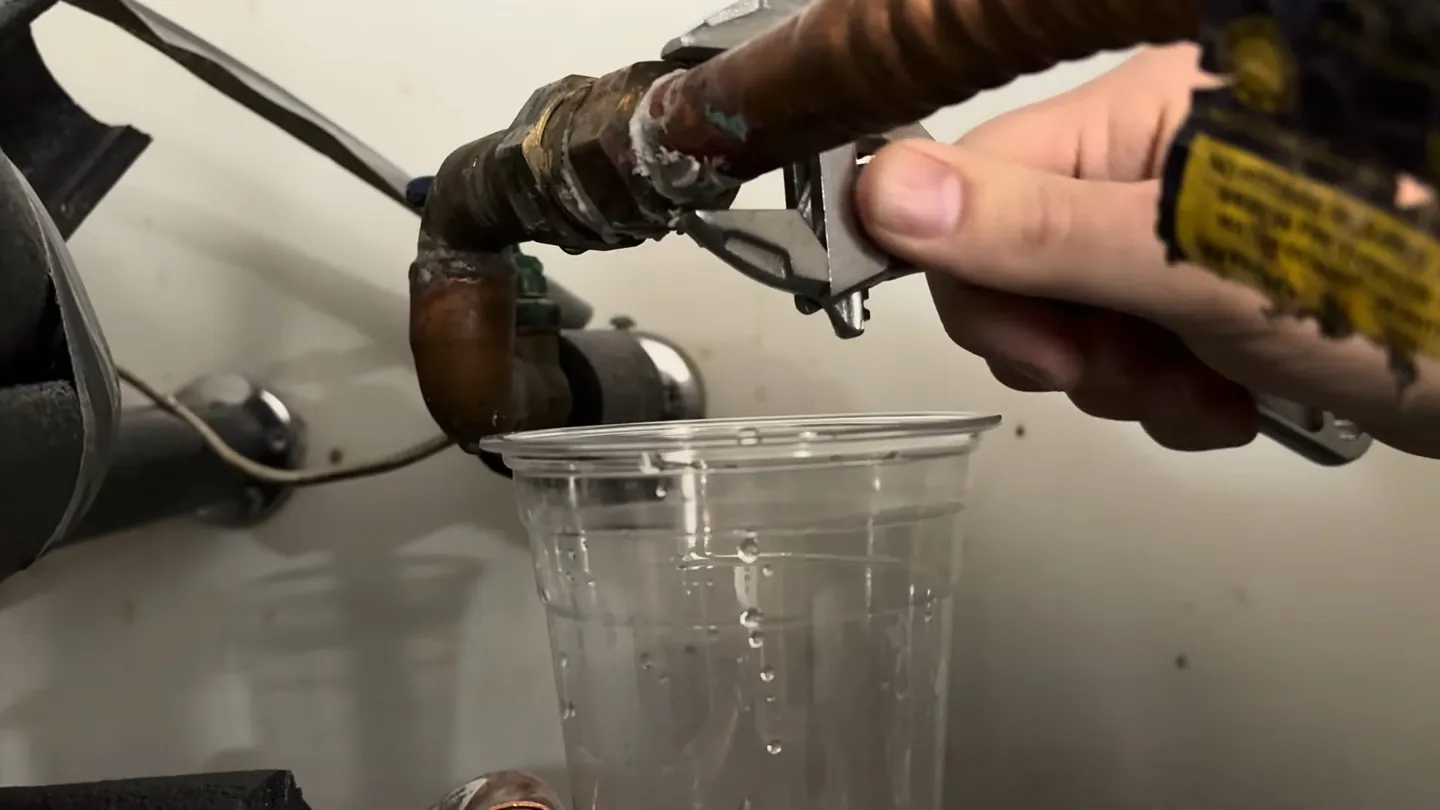
Inside a tank that has two consequences. Minerals drop out of suspension when the water is heated and settle on the floor of the tank, which is the rumbling you hear. And the sacrificial anode rod, which is there to corrode instead of the tank lining, gets used up faster.
An anode that is spent is not a failure. It is a consumable that has done its job, and replacing it is a modest repair. Leaving it spent is what turns a serviceable heater into a corroded one, which is why asking about the anode is worth doing on any unit past a few years old.
Preventing new scale is a different purchase and it is covered on water softeners. This page is about the unit you already have.
Worth doing before you call
- Note the age from the label, or from the serial number if there is no date
- Check whether the breaker has tripped, on an electric unit, before assuming a failure
- Look at where exactly the water is, and photograph it before anything is mopped
- Note whether the hot water fails everywhere or only at one fixture, because one fixture is usually not the heater
- If you can do it safely, shut the cold inlet valve on the heater rather than the whole house main
Those five answers are most of a diagnosis, and they shorten the visit considerably.
No hot water, or water on the garage floor?
Call (928) 766-1925When repair stops being the better value
A repair is usually worth it while the tank is sound. Parts are parts, and a thermostat or an element does not say anything about the rest of the unit.
The calculation changes when the tank is the problem, when the unit is near the end of its expected life and needs a significant part, or when it has already been repaired twice in a short period. At that point money spent on a repair is money spent on a unit that is going to be replaced anyway.
New installation and replacement is deliberately not this page's subject, so that a repair call does not quietly become a sales call. If replacement turns out to be the honest answer, you will be told that plainly and given the reason.
Heater failures in rentals, seasonal and small commercial units
A heater in a seasonally occupied property fails in a particular way. There is nobody present to hear the rumbling or notice the first damp patch, so the discovery is often a flooded garage found by a neighbour or a manager.
If a property is unoccupied for long stretches, shutting the cold inlet to the heater is worth the trouble. It does not stop the tank corroding, but it limits what happens if it goes.
In a small commercial setting the question that usually matters is not the repair but the downtime. If hot water is a condition of trading, say so on the first call so the part can be sourced before the visit rather than after it.
What people ask when the hot water goes
My water heater is making a rumbling noise. Is that dangerous?
It is not usually dangerous, but it is a signal. The noise is water boiling underneath a layer of sediment on the tank floor. At 19 grains per gallon that layer builds faster here than the manufacturer assumed. A flush often helps, and how much it helps depends on how long it has been left.
There is water under my heater. Does the whole unit need replacing?
It depends where the water is coming from, and that distinction is the whole question. Water at a fitting, a union or the temperature and pressure valve is a serviceable part. Water seeping from the body of the tank is the tank itself, and there is no repair for that.
What is an anode rod and why does it matter here?
It is a sacrificial rod inside the tank that corrodes so the tank lining does not. It is a consumable, not a component, and hard water uses it up faster. Once it is spent the tank starts corroding instead. Replacing one is a modest job; leaving it is what shortens a heater's life.
How long should a water heater last in Lake Havasu City?
Shorter than the figure on the box. That figure assumes average water, and local supply runs to 19 grains of hardness per gallon. We are not going to give you a number of years for this city, because we have no local failure data to support one. What we can say is that maintenance moves the date meaningfully.
Why does the cost of a water heater repair vary so much?
Because the word repair covers very different jobs. A thermostat or an element is a part and an hour. A flush is labour with no part. An anode replacement depends on access and clearance above the unit, which in a tight garage can be the hardest part of the job. Ask which of those you are being quoted for.
Can you repair it today?
Often, if it is a common part. The two things that decide it are which part has failed and whether it is on the van. Describing the symptom accurately on the phone is what makes a same-day fix likely, which is why the questions above are worth answering before you call.
Who fixes a water heater, and who should I call first?
A plumber handles the gas or electric supply, the water connections and the relief valve on a water heater, so one call covers all of it. Call for no hot water, water at the base or a pilot that will not stay lit. If water is pouring from the tank, shut the water supply to it before you call.
Find out if it is a part, a flush or a worn-out heater
Describe the symptom, the age if you know it, and whether there is water on the floor. You will be told whether this is a part, a flush or a unit at the end of its life, and what each one means for the bill.